As conversations gain momentum around the downtown segment of Calgary’s Green Line LRT, the Calgary Chamber of Commerce echoes the importance of an underground alignment to minimize long-term disruption to businesses in the downtown area and preserve downtown property tax values.
History of the Green Line LRT
As Calgary’s population continued to grow at a rapid rate, the City rightly anticipated an additional LRT line would be needed from Calgary’s northcentral to southeastern boundaries to meet the demand of commuter traffic on Deerfoot Trail – which is currently the primary transportation route between these areas. The proposed Green Line runs parallel to Deerfoot Trail through south Calgary and would provide an alternative travel link for commuters while improving connectivity within the city.
The original proposal for the Green Line LRT, drafted in 2010, noted that Calgary would need this transit service before reaching a population of 1.25 million. Calgary’s population now exceeds this figure by more than 35 per cent.
Presently, Calgary has an estimated population of nearly 1.7 million people. Growing traffic congestion impacts businesses and residents every day, driving down productivity and placing a burden on our public infrastructure. Studies from comparable North American cities, including Seattle and Memphis, show 87 per cent of public transportation trips connected riders with employment. In addition, improved transit services support densification along travel corridors and decrease urban sprawl – contributing to a more vibrant, accessible city for all.
The question is not whether an additional transit link is needed, but rather, which option will have the best outcome for the community.
The Proposed Route
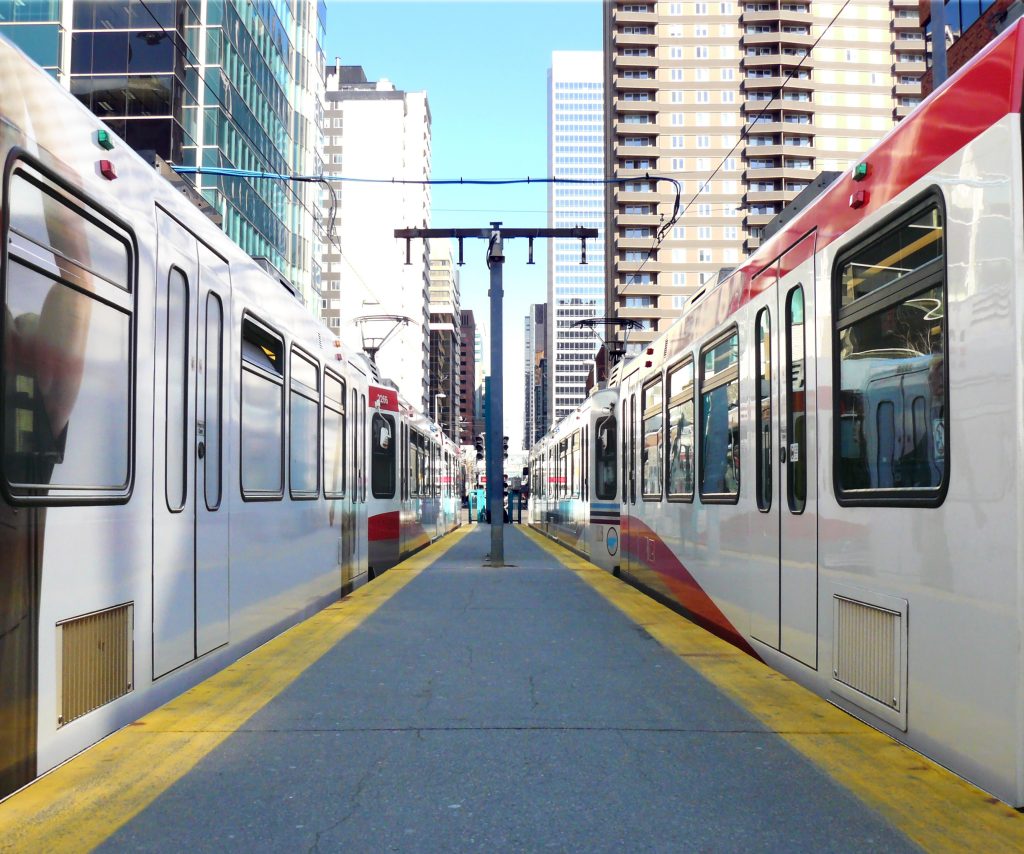
The current phase of the project comprises the southeast and downtown. Initially, the City of Calgary was proceeding with an underground alignment in the downtown segment of the route, with Phase 1 preparations beginning nearly a decade ago. However, in 2024, the Government of Alberta proposed a new design featuring an elevated alignment through the downtown segment, stating this would save $1 billion while still delivering the greatest number of stops on the line.
The proposed route begins at Shepard Station and continues up to the Beltline neighbourhood, varying between grade-level and elevated tracks. From Beltline, the route would run on elevated tracks along 10th Avenue, curving north onto 2 Street SW through the downtown core, connecting with the current Blue and Red lines on 7Avenue SW. Plans for expansion include a bridge over the Bow River, connecting downtown to northcentral neighbourhoods.
The first segment began construction in June 2025 and will include 10 stations and 16km of track from Shepard Station to Event Centre/Grand Central Station (near Victoria Park). The City of Calgary plans to start construction on the downtown segment in 2027 but is currently in the process of assessing potential costs, risks and benefits of the elevated alignment. As part of this process, they are consulting with the community on next steps.
The Case for an Underground Alignment for Downtown Calgary
Elevating the Green Line downtown would cause significant disruption to the city centre, reducing Calgary’s vibrancy, discouraging future development along the route and decreasing overall property values. This would create additional, long-term challenges for property taxes, as the assessed values of existing office buildings would fall significantly. In other words, what is seen as a less expensive option in the short term by opting for an elevated line, would have significant and long-term consequences on the value of downtown real estate.
Existing Investment
The City has already invested $1.3 billion in an underground alignment; this means the predicted cost savings for an elevated alignment, also evaluated at $1.3 billion, are negligible. In addition, businesses have already been impacted by preparations for an underground alignment. Phase 1 preparations, which occurred from September 2022 to October 2024, involved significant disruption as the City removed and relocated potential utility conflicts. While these were relatively short-term disturbances, the long-term and permanent loss in access to businesses along the elevated alignment during construction and operation would be devastating for many business owners.
Property tax and Public Safety
An underground alignment would boost property tax revenue, rather than destroy it, by allowing new businesses to continue developing along the proposed route. It would also minimize public safety concerns in the downtown area, keeping public spaces open and visible along the route. A city’s vibrancy is tied to its street life – and the elevated would sterilize the opportunity to enhance activity in Calgary’s downtown core – which is already challenged because of the Plus-15 network.
Restoring the Green Line’s original design of an underground alignment would ensure reliable connectivity for workers and businesses. Although both options present short-term disruption during the construction phase, the long-term investment of an underground alignment would ensure the success of businesses for future generations.
Investments in public infrastructure must consider longevity over cost-savings. Public transit is an essential building block of a productive city, connecting people to employment, services and retail. A reliable, community-oriented transit network strengthens the entire business ecosystem and contributes to Calgary’s reputation as a competitive location to live, work and invest.
As the City consults with the community this month on the future of the Green Line, the Chamber encourages businesses to voice their opinions and consider the impact of an underground alignment on the future profitability and long-term vibrancy of our city as being superior to the elevated option.