This blog was written by Ravi Sekhon, Owner of Freshii Sundance
Ordering lunch for a Calgary workplace sounds simple until the organizer has to balance a meeting schedule, headcount, budget and different dietary needs. The best approach is not to guess what everyone can eat or order a completely separate menu for each person. It is to collect the right information early, choose a flexible meal format and make every selection easy to identify.
Start with a private needs check
Before requesting a catering quote, ask attendees for the information that affects the order: dietary preferences, allergies or intolerances, religious dietary requirements and any other accommodation they want the organizer to know about. Collect responses privately and send the caterer a summary of quantities rather than personal details.
A preference is not the same as an allergy or medical restriction. If someone reports a serious allergy, speak directly with the catering provider about ingredients and preparation. A label such as vegan, vegetarian or gluten-friendly does not automatically mean a meal is suitable for every allergy or medical condition.
Build flexibility into the order
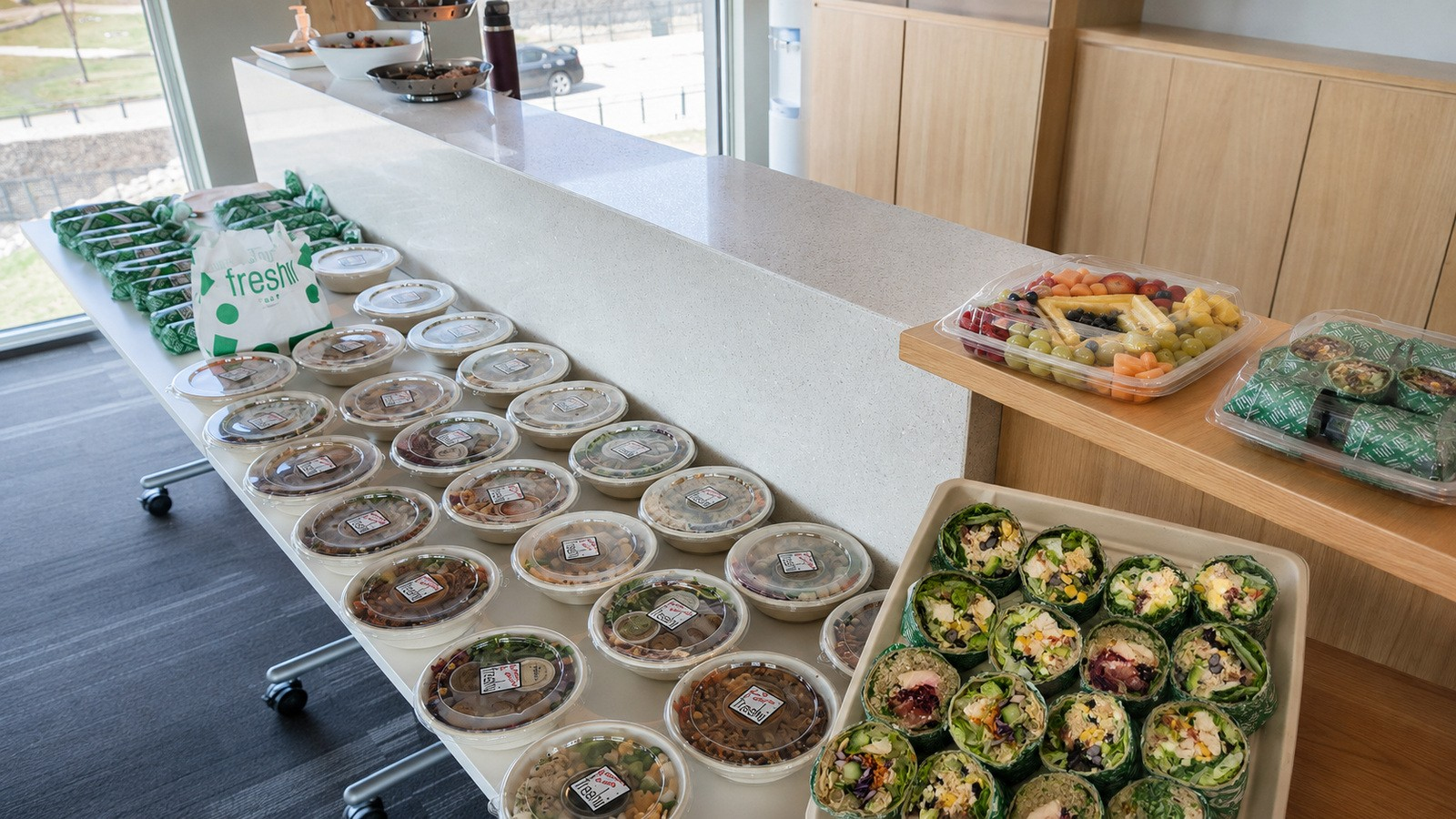
Bowls, wraps and salads work well for mixed groups because they can start with a plant-based foundation and be adjusted with sauces, toppings and optional proteins. Individually packaged meals reduce uncertainty when needs are specific, while fruit, vegetable and wrap platters can make sense for informal meetings or open-house events. A hybrid order often works best: shared platters for the group, plus clearly labelled individual meals for people with specific requirements.
At Freshii Sundance, meat is stored separately and added at the end according to each customer’s choice. This makes it practical to prepare vegetarian and vegan orders without pre-added meat, while certified halal chicken and steak can be selected separately. Organizers should still confirm ingredients and handling procedures for any allergy or medical concern.
Use labels that answer real questions
A useful label should identify the person or meal, the main item and the relevant dietary designation. Sauces and dressings should also be identified when they are packed separately. Grouping the order into clear sections—such as vegan, vegetarian, halal and standard selections—helps people find their food without opening several containers or asking the organizer to interpret every choice.
Match the format to the meeting
The right format depends on how the food will be used. A short working lunch usually benefits from individually labelled meals that are quick to distribute. A longer team event may suit wrap, fruit and vegetable platters with a few individual meals set aside. School lunches generally need simple portions, clear labels and easy handling. For meetings that run through lunch, confirm that cutlery, napkins, serving utensils and condiments are included rather than discovering a missing item after the meeting begins.
Plan delivery and quantities early
Share the requested delivery window, building access instructions, floor or room number and an on-site contact. Allow a small setup buffer, especially in downtown Calgary or buildings with loading and elevator restrictions. Confirm how long food can be held safely if it arrives early. Finalize the headcount close enough to the event to reduce waste, while keeping a modest contingency for an unexpected guest.
A practical office-catering checklist
- Confirm the headcount and serving time.
- Collect dietary needs privately and separate preferences from allergies.
- Choose shared platters, individual meals or a hybrid format.
- Request clear labels and identify sauces or dressings.
- Confirm delivery access, setup needs and the on-site contact.
- Review the final order by category before the delivery date.
Good office catering is less about finding one meal that suits everyone and more about creating a clear system that gives people appropriate choices. A short needs check, a flexible menu and accurate labels can make the meal easier for attendees, organizers and the catering team.
Calgary teams looking for a local example can review office catering options from Freshii Sundance, including individually packaged meals and fruit, vegetable and wrap platters.
About the author
Ravi Sekhon is the owner and operator of Freshii Sundance, a locally owned restaurant at Sunpark Plaza that has served Sundance and Southeast Calgary since 2015.