Debt constraints limiting business’ ability to access capital, with early-stage, small and minority-owned business the most challenged
Calgary, July 22, 2024 – In anticipation of the Bank of Canada’s upcoming interest rate decision, coupled with high business optimism and recent easing of inflation toward target, a recent Survey on Business Conditions – conducted by Statistics Canada in partnership with the Canadian Chamber of Commerce – highlights 24 per cent of Calgary businesses are struggling to access capital, with early-stage startups, small enterprises and minority-owned businesses feeling the greatest impact. Businesses cited several reasons for this challenge, with the lack of liquid assets, credit ratings and uncertainty around future sales among the most prevalent.
Access to capital is essential for increasing business growth and productivity across all sizes and sectors. It is required to invest in employees, new technology, research and development and general business expansion. With the world’s largest economy south of the border, the competition for capital is increasingly tight and in Canada, significant roadblocks remain. Government policies that can support the availability of low-cost and low-risk capital are essential to ensure Canadian businesses have the financial support required to grow and succeed.
Early-stage struggles
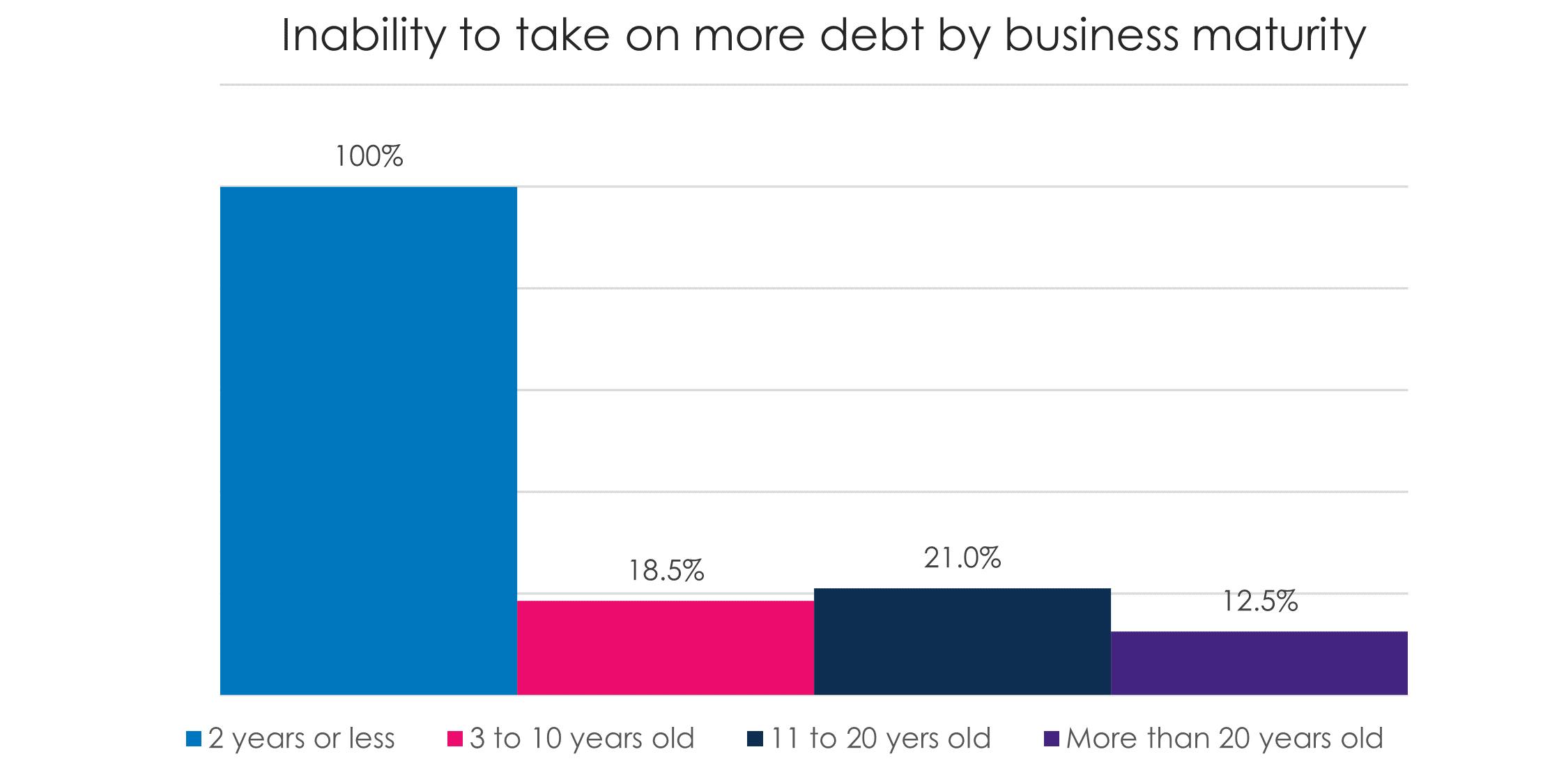
According to data from the first half of 2024, early-stage businesses – those less than two years old – are feeling the most significant pressure, with 100 per cent of early-stage respondents expressing an inability to take on more debt, citing unfavorable payment terms and cash flow challenges. With over 450 start-ups in Calgary, ensuring their success is not only important to investors and entrepreneurs but also to the success of Calgary’s diversification and productivity.
When a business is unable to take on debt, their pool of prospective capital becomes exponentially smaller, given financial loans are the most common source of capital for small- to medium-sized businesses. Moreover, if a new business is unable to attract necessary capital, it becomes difficult to pay expenses, loans, wages and other financial commitments, limiting their ability to invest in efficiencies and reducing their capacity to hire and grow. In Canada, the ability to scale matters, and according to Statistics Canada there is a positive correlation between business size and staying in business. On average, businesses that start with 1-4 employees see a 62 per cent survival rate after 5 years, compared to businesses with 20-99 employees, which see a 74 per cent survival rate. The faster a business can scale up through investing in employees the better chance they have at succeeding beyond the first five years – access to capital is a critical part to this success.
Larger businesses faring better
The success of small businesses to the Canadian economy cannot be understated, with 97.8 per cent of businesses considered small. According to Global Affairs Canada, small- and medium-sized businesses were responsible for almost 64 per cent of all private sector jobs in 2022 and accounted for almost half of GDP.
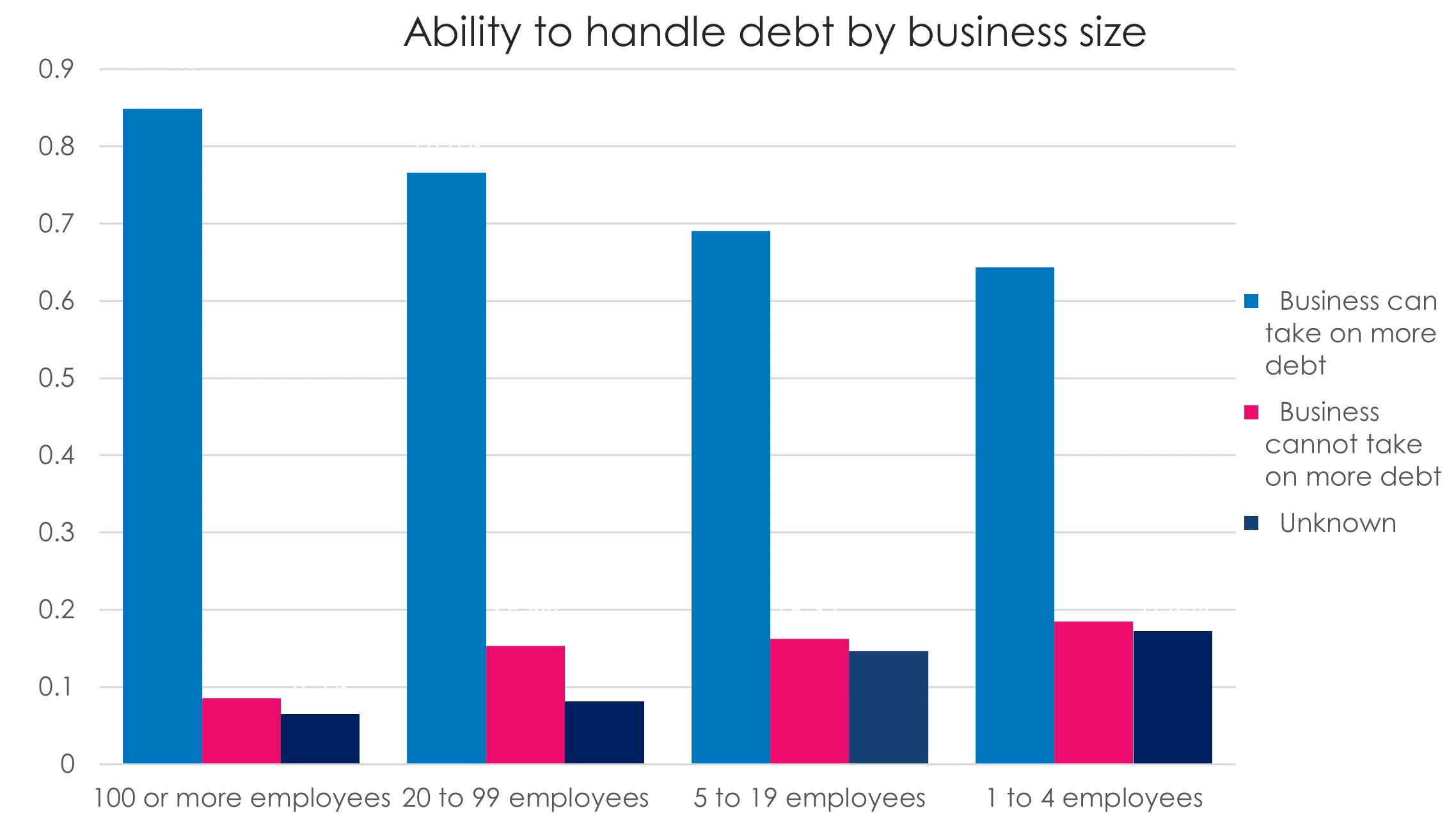
Organizations with 100 or more employees have more flexibility when it comes to taking on additional debt relative to smaller businesses according to the most recent survey, with 84 per cent of large businesses citing an ability to do so, an increase of nearly 10 per cent compared to the same quarter last year. For micro-businesses (1-4 employees), however, the number of businesses able to take on more debt drops by over 20 per cent compared to large businesses in the same quarter, the biggest reasons being cashflow (68%), interest rates (44%) and uncertainty around future sales (36%).